


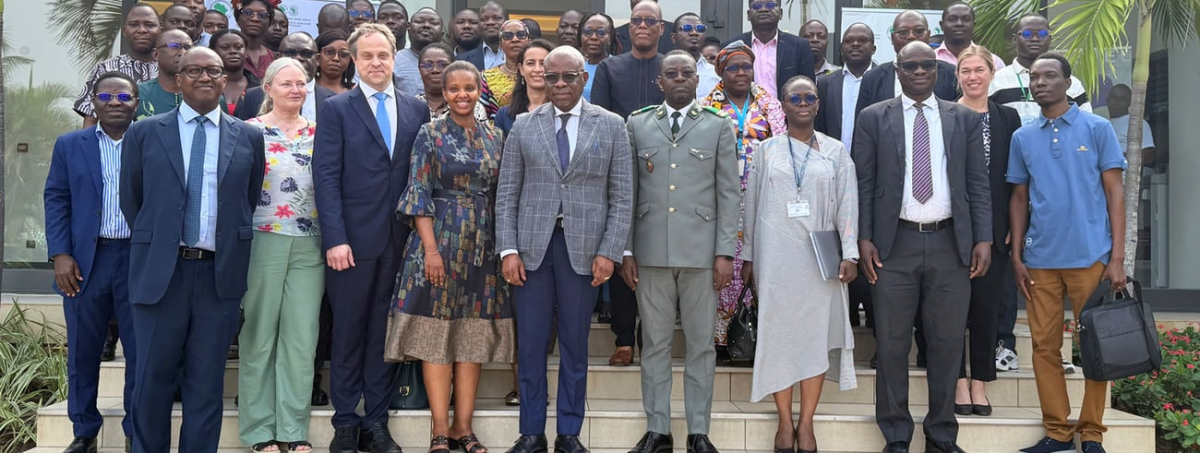
The Republic of Benin formalised its Circular Economy Action Plan on 5 February 2026, aiming to embed circularity at the heart of economic growth by strengthening national competitiveness, resilience and sustainable development, the government announced.
According to the African Development Bank Group, the plan is supported by the Bank's African Circular Economy Facility. The initiative aligns with Vision Benin 2060 Alafia, the country's national development strategy.
José Didier Tonato, minister of the Living Environment and Sustainable Development, said: "The Action Plan is not only essential for environmental management, but also useful for an economic transition as envisaged in the national development strategy, Vision Benin 2060 Alafia."
He noted that Benin is already taking action, recycling 70% of materials used to build old roads and reprocessing 90% of wastewater from textile factories in the Glo-Djigbe economic zone.
The plan sets targets for 2035 including 25% recycling rates, full urban waste collection and up to 60% coverage in rural areas, training 15,000 citizens and supporting 300 circular businesses, up from 19 currently operating.
Dr Al Hamndou Dorsouma, head of the African Development Bank's Green Growth and Climate Change Division, said: "The African Development Bank stands with Benin to translate this plan into tangible results."
He noted enthusiasm among young innovators during a visit to Impact Hub Cotonou as part of a mission by the steering committee of the African Circular Economy Fund.
Benin produces 50,000 tonnes of plastic annually, most of which remains unrecycled, and approximately 1,700 tonnes of municipal waste daily, with direct consequences for health, the economy and urban planning. Several municipalities have adopted circularity initiatives showing measurable impact.
Read the full details of Benin's circular economy transformation.





.png)

