


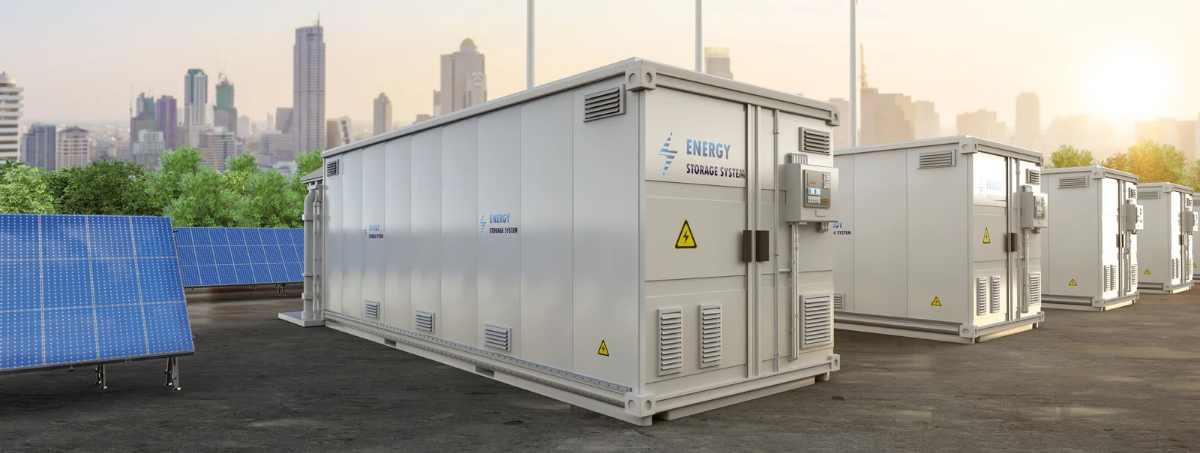
Norwegian renewable energy developer Statkraft has started commercial operations at the first 50MW phase of its 750MW Neilston Greener Grid Park battery energy storage project outside Paisley in Scotland, reported by Solar Power Portal. It is Statkraft’s first grid-forming battery to enter commercial operation in the UK, following more than three years of construction that began in August 2023.
Statkraft is an Oslo-headquartered renewable energy generator with around 6,500 employees in 20 countries, and, as stated in its fourth-quarter results, reported underlying EBITDA of NOK 26.8 billion (about €2.3 billion) on generation of 72.1TWh in 2025. The first phase of Neilston forms part of Statkraft’s UK renewable investments, which exceed £2 billion.
The structural driver is the need for grid-forming capability as the electricity system moves away from fossil fuel generation. Grid-forming batteries help stabilise the network, and Kevin O’Donovan, Statkraft’s UK and Ireland country manager, said “urgent action is needed to transform our electricity grid and make it fit for the future.”
O’Donovan said innovative projects like Neilston “will help us to move away from fossil fuels to a low-carbon electricity system, stabilising consumer bills and strengthening Great Britain’s energy security.” Statkraft was granted approval to expand Neilston to 750MW in August 2025, though it did not give a timetable for the expansion this week.
Statkraft has a pipeline of other Greener Grid Park projects, including the 50MW Coylton project, also in Scotland, where construction began in July 2024. The company described Coylton as its second grid-firming battery scheme.
Elsewhere this year, Statkraft secured planning permission for a 32MW solar-plus-storage project in Cornwall and started commercial operations at a 20MW BESS at Cushaling.
For the sector, Neilston shows developers phasing large grid-forming battery sites into operation, with the first 50MW online while the rest of the 750MW remains in development, and with further sites such as Coylton advancing in parallel.









.png)

