


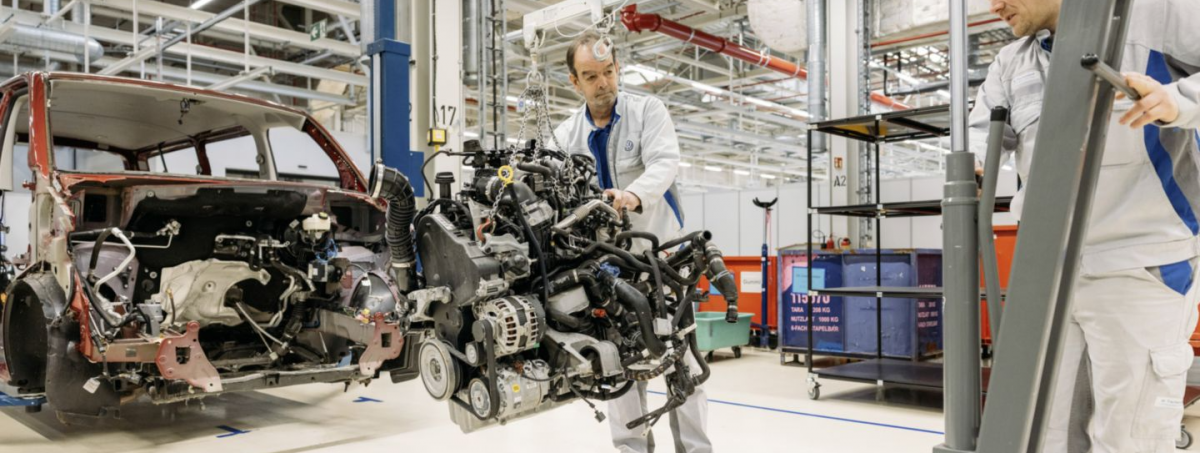
Volkswagen is repositioning one of its flagship German manufacturing sites as a hub for circular economy operations, signalling how sustainability is becoming embedded in core industrial strategy rather than treated as a peripheral activity.
From 2030, the automotive group plans to dismantle and recycle up to 15,000 vehicles annually at its Zwickau plant in Saxony, transforming the facility into its global centre of excellence for circular economy processes. The company expects to invest up to €90 million in the project, supported by up to €10.8 million in public funding from the German federal state of Saxony.
The initiative will see used vehicles from across Volkswagen Group brands, including both electric and internal combustion-engine models, returned from customers and dealerships to the Zwickau site. Each vehicle will be assessed to determine whether it is suitable for refurbishment or full dismantling.
Reusable components such as doors, headlights and engines will be prepared for re-entry into the market, including the used vehicle and spare parts sectors. Where reuse is not viable, materials will be recovered for recycling, with a particular focus on metals and battery materials from electric vehicles.
Andreas Walingen, head of Volkswagen’s circular economy division, said the project delivers multiple strategic benefits for the group. “This will make Volkswagen less dependent on global raw materials markets, reduce the carbon footprint of our vehicles, and create new business models,” he said.
While Volkswagen has not yet set a specific recycling target, Walingen pointed to benchmarks from other sectors, noting that “more than 80 percent of materials could typically be recycled, and over 90 percent in the case of batteries.”
Explore how Volkswagen plans to scale circular vehicle recovery and reuse in the full story.








.png)

