


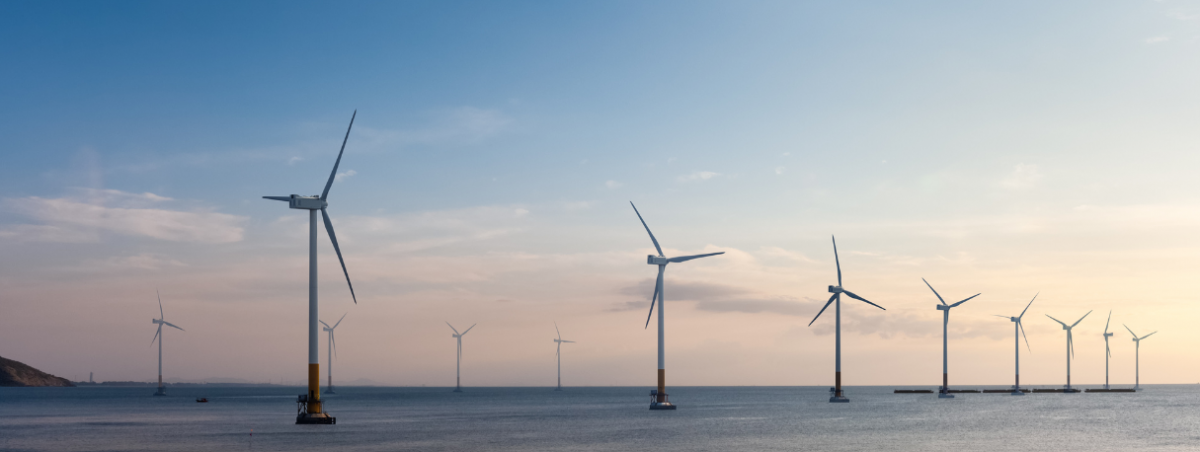
Ireland’s offshore renewable energy decade has clearly begun. On 14 May 2026, Minister Darragh O’Brien published the Offshore Renewable Energy Annual Report 2025, confirming that planning applications for all five Phase One east coast projects have been lodged, the Port of Cork is on track to be ORE-ready in 2026, and the Tonn Nua auction has been awarded. Ireland’s offshore wind supply chain has become a confirmed commercial pipeline.
The Annual Report is commercially significant and practically grounded. The five Phase One projects have a collective capacity of 3.8 gigawatts, more than 60 per cent of Ireland’s present peak electricity demand. Tonn Nua adds 900 megawatts off the south coast following approval of the South Coast Designated Maritime Area Plan. The three commercial dimensions most relevant to green sector organisations are port readiness, supply chain localisation and the offshore skills programme under active delivery.
Port infrastructure is the most immediately bankable commercial frontier. The Port of Cork’s redevelopment, on track for ORE readiness in 2026, will become the primary hub for south coast offshore wind fabrication. Construction of Ireland’s first direct electricity interconnector to continental Europe, a €1.6 billion cable linking Cork to Brittany, is under way. Net electricity imports grew from 14 to 17 per cent of demand in 2025, underscoring the urgency of building domestic generation capacity.
Supply chain localisation is where the greatest near-term opportunity lies. The Offshore Wind Industrial Strategy ‘Powering Prosperity’ provides a framework for maximising Irish economic content across the value chain. Propel Ireland, the Offshore Wind Centre of Excellence, connects international developers with Irish supply chain companies and institutions. Marine engineering, subsea technology, construction and environmental monitoring are priority supply chain areas in the report’s implementation matrix.
The offshore skills agenda provides the third commercial dimension. The Offshore Wind Skills Action Plan is in active implementation, with ORE-specific courses launched and a skills hub in development. The Maritime Area Regulatory Authority’s draft competitive MAC framework provides regulatory certainty for developers and supply chain partners. IDA Ireland confirms that Ireland’s pipeline attracts RWE, Statkraft and Corio Generation, bringing international supply chain standards that Irish businesses must now meet.
Three actions would help green sector organisations capitalise. First, Irish engineering, construction and marine companies should register with Propel Ireland’s supplier database ahead of Phase One construction from 2027. Second, businesses with manufacturing or logistics capabilities should assess assets against port readiness requirements for Cork and Rosslare. Third, organisations should engage with the Offshore Wind Skills Action Plan to ensure their workforce meets standards required by international developers.
The Offshore Renewable Energy Annual Report 2025 confirms that Ireland’s offshore wind transition has moved decisively from ambition to confirmed delivery pipeline. Globally, offshore wind supply chains are among the fastest-growing industrial procurement markets in the world. Ireland’s Atlantic position, its 4 gigawatt ORESS pipeline and the Port of Cork’s ORE readiness give Irish businesses a credible entry point. The commercial scale-up of Ireland’s offshore wind sector is the defining green business opportunity of the entire decade ahead.
(The views expressed by the writer are his/her own and do not necessarily reflect the views or positions of BusinessRiver.)










.png)

